

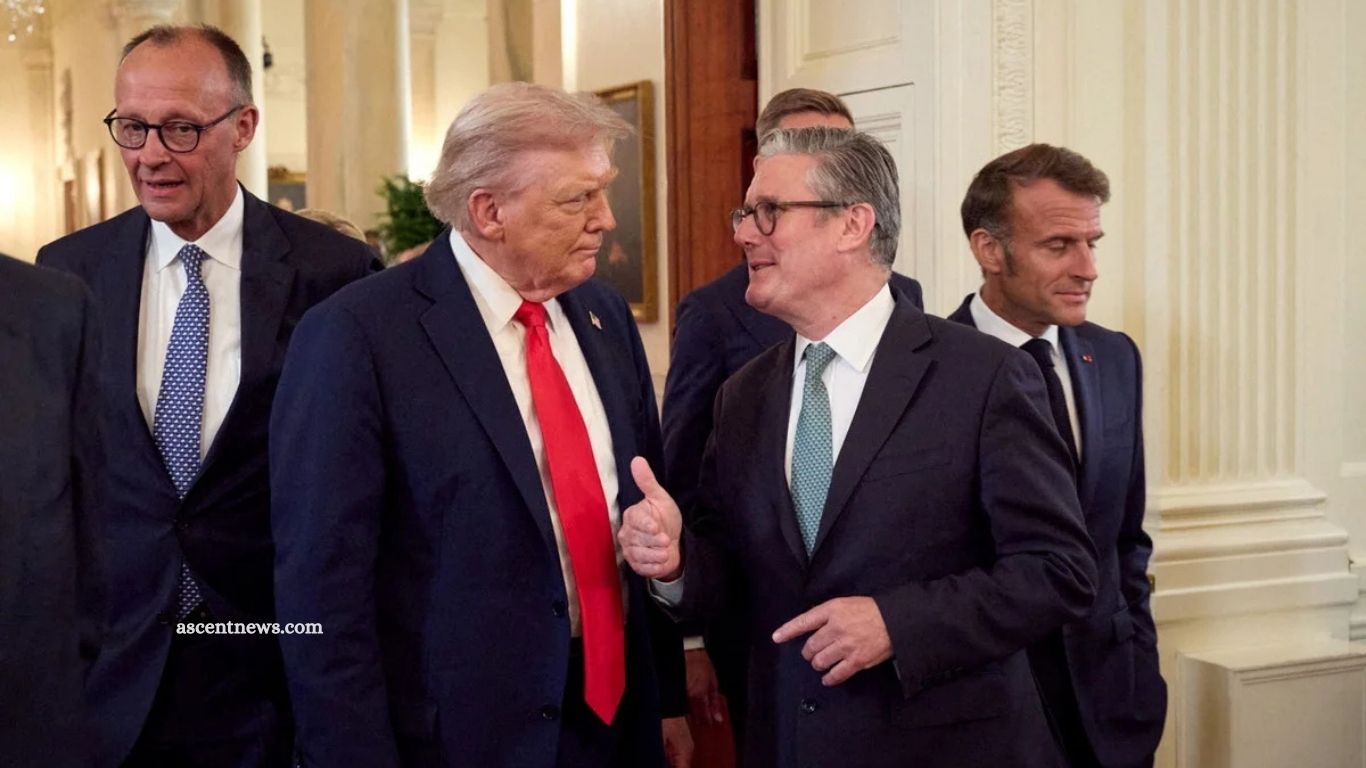
European leaders often find themselves navigating the unpredictable world of Donald Trump’s foreign policy, where favors are granted sporadically and unpredictably. Like pigeons trained to expect food at irregular intervals, diplomats perform elaborate rituals lavish gestures, strategic compliments, and choreographed meetings in hopes of securing American support.
While their actions are rational and occasionally effective, they carry an element of superstition, reflecting the uncertainty of engaging a president who prizes personal loyalty and admiration above consistent policy. Against this backdrop, Vladimir Putin cultivates Trump as a protégé, exploiting his desire for greatness to advance Russia’s interests, creating a delicate and often unstable balance in global diplomacy.
Pigeon-Like Behavior in Politics
Hungry pigeons fed at irregular intervals develop odd rituals—tics, dances, and erratic jerks—hoping for another morsel. Psychologist B.F. Skinner observed this “superstition” in birds, where behavior seemed causally linked to food even when it wasn’t. European leaders, while far more rational, display a similar pattern when navigating Donald Trump’s unpredictable distribution of favors. Diplomatic gestures, unusual postures, and cultivated contacts are all attempts to secure steady transatlantic support—reliable, yet inherently uncertain.
Read More: Washington Summit 2025: Europe, Ukraine, and the US Navigate High-Stakes Diplomacy
Starmer, Stubb, and the Art of Wooing
In February, UK Prime Minister Keir Starmer invited Trump to Britain, resulting in leniency under the White House’s tariff regime. In March, Finnish President Alexander Stubb impressed Trump on the golf course while warning against Vladimir Putin, briefly softening Trump’s stance toward Russia. Such gestures illustrate a mixture of strategic diplomacy and ritualized attempts to influence an erratic ally.
NATO’s Choreographed Deference
At the June NATO summit, European leaders presented increased defense budgets as tributes to Trump’s leadership. Secretary-General Mark Rutte praised him publicly, thanking Trump for spurring Europe to fund its own defense. The strategy yielded short-term results: Trump expressed warmer views of NATO and colder tones toward Russia, demonstrating that well-calibrated displays of loyalty can yield tangible outcomes, though the effects are unpredictable and temporary.
Putin’s Countermoves
Yet the influence of European diplomacy is countered by Russia. At a recent bilateral summit in Alaska, Putin secured a roadmap for Ukraine that followed Kremlin objectives—no imminent ceasefire and concessions of unconquered territory. By cultivating Trump as a “protégé,” Putin reinforces his own vision of geopolitics: a world governed by power players who reshape borders without concern for international law.
The Continued Dance
European leaders, including Ukrainian President Volodymyr Zelenskyy, returned to Washington seeking further US support. The meetings avoided the humiliations Zelenskyy faced earlier in the year, but substantive outcomes remain vague: security guarantees for Ukraine echo NATO’s Article 5, yet details on enforcement and deterrence are uncertain. The ritual continues, with repeated gestures aiming to maintain transatlantic unity.
Propaganda, Perception, and Power
Putin’s narrative cast Zelenskyy as either a puppet or a threat to Russia, intended to justify invasion. The Alaska summit allowed Russia to portray itself as an equal to the US, reinforcing a perception of parity that Trump readily accepted. European efforts, while somewhat effective in shaping US policy, are hampered by the enduring influence of Russian disinformation and Trump’s own narcissism.
Trump as Protégé, Not Patron
Unlike European leaders, Putin cultivates Trump as a partner in a global power hierarchy, reinforcing Trump’s desire for personal greatness and admiration of authoritarian figures. The result is a diplomatic imbalance: while Europe’s influence is significant, it is fragile and constantly challenged by Russia’s strategic engagement with the US president.
The Limits of Trump-Whispering
In the short term, European leaders can nudge Trump toward policies supporting Ukrainian independence, but they cannot reshape his fundamental worldview. The alliance’s current approach—persistent, ritualized diplomacy—can secure temporary victories, yet it remains unstable. Efforts to treat Trump as a predictable actor risk veering into superstition: performing the right gestures may gain favors, but cannot guarantee lasting friendship or alignment.
Building Europe as an Independent Power
The long-term solution lies in cultivating Europe’s own economic and military weight. A unified, confident, and autonomous Europe could communicate in the only language Trump fully understands: strength and leverage. Until then, Europe’s diplomatic rituals, while occasionally effective, resemble a delicate dance—reliant on timing, repetition, and hope.
Frequently Asked Questions
Why do European leaders appear to “perform rituals” for Trump?
European leaders engage in choreographed gestures, strategic compliments, and public displays of loyalty to influence Trump’s decisions. While rational, these actions resemble ritualized attempts to secure consistent support from an unpredictable president.
How does Putin manipulate Trump?
Putin treats Trump as a protégé, appealing to his desire for personal greatness. By cultivating admiration and framing Russia as an equal global power, he advances Kremlin objectives while undermining European influence.
Have European efforts produced results?
Yes. Strategic diplomacy, such as increased defense spending or high-profile visits, has occasionally nudged Trump toward supporting NATO and Ukraine. However, results are unpredictable and often temporary.
What are the limits of “Trump-whispering”?
While repetition and persistence can influence decisions, Europe cannot change Trump’s fundamental worldview. Reliance on rituals risks creating fragile, short-term outcomes rather than lasting policy stability.
What is the long-term solution for Europe?
Europe must develop autonomous economic and military power, enabling it to negotiate from strength rather than rely on choreographed diplomacy or hope for Trump’s favor.
Conclusion
European diplomacy with Donald Trump is a delicate dance of strategy, persistence, and occasional ritual, designed to influence an unpredictable leader while countering Russian manipulation. While these efforts can produce short-term gains nudging the U.S. toward supporting NATO and Ukrainian security they remain inherently unstable. True long-term influence requires Europe to build autonomous economic and military strength, capable of commanding respect on the global stage.