

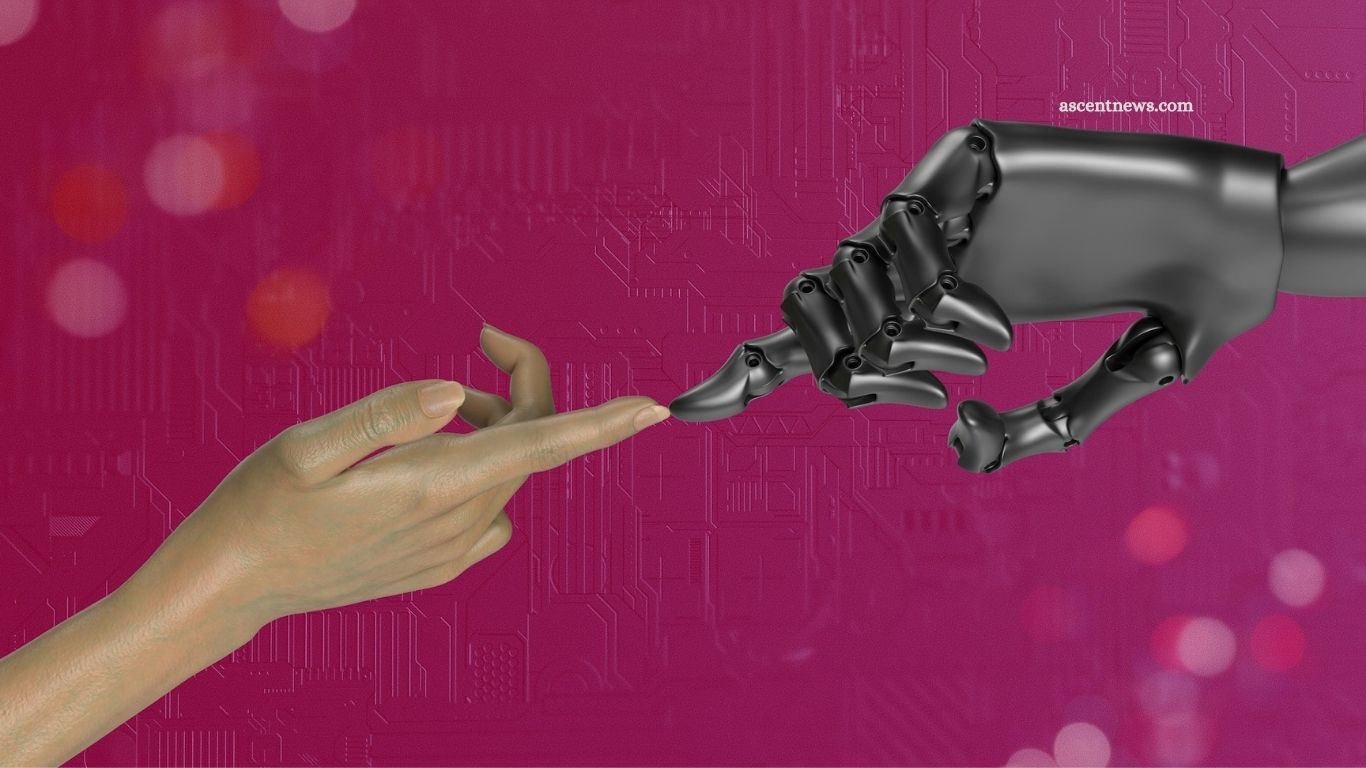
Gen Z is entering a world where artificial intelligence (AI) is no longer just a concept—it’s shaping careers, communication, and daily life. From personalized learning and virtual assistants to AI-driven creativity and automation, technology is becoming an inseparable part of our future. As the first generation to grow up fully immersed in digital innovation, Gen Z faces unique opportunities and challenges.
While AI promises efficiency, creativity, and new career paths, it also raises ethical questions, privacy concerns, and the risk of job displacement. Understanding how to leverage AI responsibly will define this generation’s success. For Gen Z, the key lies in balancing technology’s potential with thoughtful decision-making, ensuring that AI enhances life rather than complicates it.
What’s fact, what’s fiction? Will we know?
An older family member recently showed me a Facebook video claiming Donald Trump accused India of violating a ceasefire with Pakistan as per Pakistani news media. At first glance, it seemed real—but cross-referencing with credible news sources revealed it as AI-generated false imagery. Despite my explanation, my family member insisted it was genuine because it “looked real.” Without my intervention, they likely would have shared it with dozens of contacts.
Another video appeared on my TikTok feed, showing male migrants arriving in the UK. One vlogger claimed, “This dangerous journey, we survived it. Now to the five-star Marriott hotel.” The account, migrantvlog, posted 22 similar clips over five days, amassing hundreds of thousands of views. Subtle AI flaws—blurry backgrounds and oddly simulated characters—made it clear the content was fake. Yet most viewers didn’t notice, leaving the comment section flooded with racist and anti-immigration reactions.
The rise of AI-generated misinformation is alarming. While the Online Safety Act targets state-backed disinformation, ordinary users can unwittingly amplify false content. Last summer’s riots, fueled in part by AI visuals, highlighted the danger. Without media literacy, many are vulnerable to these convincing yet fabricated narratives, escalating societal tensions.
Read More: Women in Power: The Change We Expected
AI can help tell great stories – but who controls the narrative?
The first time I used AI in my work was for a match report. Facing a tight deadline and a stubborn opening paragraph, I fed my notes into an AI tool. To my surprise, it suggested a headline and introduction that clicked, saving me time and getting me unstuck when the clock was ticking.
AI isn’t a magic wand. It can polish sentences and trim wordiness, but it can’t chase sources, capture atmosphere, or instinctively shift a story’s direction. Those judgments remain mine.
Its biggest value has been as a judgment-free editor. As a young freelance journalist, I don’t always have access to regular editorial support. Sharing an early draft with a real editor can feel exposing. AI, by contrast, lets me experiment, refine phrasing, and build confidence before submitting.
Still, caution is essential. Journalism risks losing creativity and depth if speed-driven tools start shaping what stories are told—or how. For now, AI is an assistant; the direction and decisions remain ours.
Author’s note: I drafted this piece myself, based on real experiences, then used ChatGPT to tighten flow, clarify phrasing, and polish style. Prompts like “Rewrite in a natural, Guardian-style voice” helped refine the text, but the ideas, voice, and structure are entirely mine.
Does our environment pay the price of AI?
AI is undeniably powerful, a technological leap that cannot be ignored. Yet I’m concerned—about my job, the environment, and the hidden costs of this rapid expansion.
Understanding AI’s true impact is difficult, as companies tightly guard their data. But available research paints a sobering picture. One study examined OpenAI’s ChatGPT-4o, finding its annual energy use equals that of 35,000 households—roughly 450,000 KWh, comparable to 325 universities or 50 US hospitals. Cooling these supercomputers adds another layer of resource use, requiring an estimated 2,500 Olympic-sized swimming pools of water.
While lighter AI tools like Perplexity or Claude consume far less, the global footprint of data centers is already significant. In Ireland, data centers used 22% of national electricity last year—more than urban households. With over 6,000 centers in the US alone and rapid AI growth since 2018, these numbers are set to rise sharply.
Despite the grim statistics, there’s reason for cautious optimism. Researchers are developing more efficient processing units, exploring nanoscale materials, and refining AI models. Compared with early language-learning systems from seven years ago, today’s models are vastly more efficient. Energy-hungry centers will adapt—it’s a question of when, not if.
If AI is the matchmaker, will I know who I’m dating?
“You need to get out there, meet people, and date, date, date!” is the cliché I hear most when talking about being in my 20s. After a few awkward dates and countless gossip sessions with friends, a new fear crept in: what if they’re using AI to message me?
It started with overly formal replies or conversation starters that sounded almost too perfect. I’m not anti-AI, and I don’t think resisting it will stop its rise. But I worry about our ability to form genuine connections.
Pre-existing insecurities about how we speak, write, or present ourselves make a generation armed with AI easy prey. A simple prompt to ChatGPT can make a message friendlier—but reliance on it can grow, eroding confidence in your own voice. The 2025 Match.com Singles in America study, produced with the Kinsey Institute, found that one in four US singles have used AI in dating.
Perhaps I’m being cynical. But for those unsure about how they come across in dating, it’s worth remembering: if it’s meant to be, it will be. Leaning too heavily on AI may risk losing not just authenticity—but yourself.
I can see humans and AI learning together
The rise of AI in education challenges the notion of impartial or neutral knowledge. In this new era, every piece of information demands scrutiny.
Universities increasingly rely on AI to assist teaching and learning, making it impossible to separate the technology from education. Yet we must critically examine the mechanisms and narratives that shape its use.
My first encounter with AI in education came when I asked ChatGPT to suggest reading resources for a course. I expected an advanced search engine—but soon saw how AI’s tendency to hallucinate, presenting false or misleading information as fact, makes it both a producer and distributor of knowledge.
Initially, I viewed this as a minor hurdle given AI’s potential and expected improvement. But it’s now clear that ChatGPT, Gemini, and similar chatbots contribute to the spread of misinformation.
AI has made our relationship with technology more precarious. Research is urgently needed to understand its implications across the social sciences, including its role in learning and daily life. I hope to explore how we can adapt to AI not just as a tool, but as an active participant in society.
It’s a great tool for architecture – literally shaping the world around us
During my early years at university, we were discouraged from using AI for architecture essays or models, limited to proofreading. By my final year, AI had become integral to rendering and enhancing design work.
Our studio tutor ran a mini-seminar on crafting effective AI prompts, allowing us to feed our models and drawings into platforms like Visoid. AI could generate concept designs aligned with our proposals, adding complexity and breadth to our ideas. It proved especially useful during the conceptual phase, though inaccurate prompts could derail results—teaching us to be strategic. I often used AI as a final touch to create seamless, polished images.
In the first two years, I drew inspiration mainly from existing buildings, but AI introduced innovative approaches that accelerated design exploration and encouraged experimentation.
Having completed my degree, I now see AI not as a replacement for creativity, but as a tool to enhance it. Architectural firms increasingly seek candidates with AI skills, and the technology is already shaping real-world projects. Staying current with these advancements has always been crucial in architecture—and AI has only reinforced that necessity.
Frequently Asked Questions
What is AI’s role in education today?
AI assists learning and teaching by offering research support, generating study resources, and enhancing conceptual understanding, but it must be used critically due to potential inaccuracies.
Can AI improve creativity in architecture?
Yes. AI can enhance design by generating multiple concept variations, refining visualizations, and accelerating experimentation, while human creativity remains essential.
Is AI reliable for academic work?
AI can support research and proofreading, but it may produce misleading or false information, so verification from trusted sources is essential.
How can students use AI responsibly?
Use AI as a tool for brainstorming, editing, and visualization, but avoid over-reliance and always fact-check outputs.
Does AI threaten jobs in creative fields?
AI can augment work by increasing efficiency and offering new insights, but it cannot replace the judgment, intuition, and originality of human professionals.
How is AI changing the dating experience?
AI can craft polished messages, but overuse may reduce authenticity and confidence in personal communication.
What are the environmental impacts of AI?
AI processing and data centers consume significant energy and water, though research is ongoing to develop more efficient and sustainable systems.
Conclusion
AI is transforming the way we learn, create, and communicate, offering unprecedented tools for innovation and efficiency. Yet it also raises critical questions about authenticity, reliability, and responsibility. From education and architecture to journalism and personal interactions, AI should be seen as an enhancer of human potential not a replacement.