

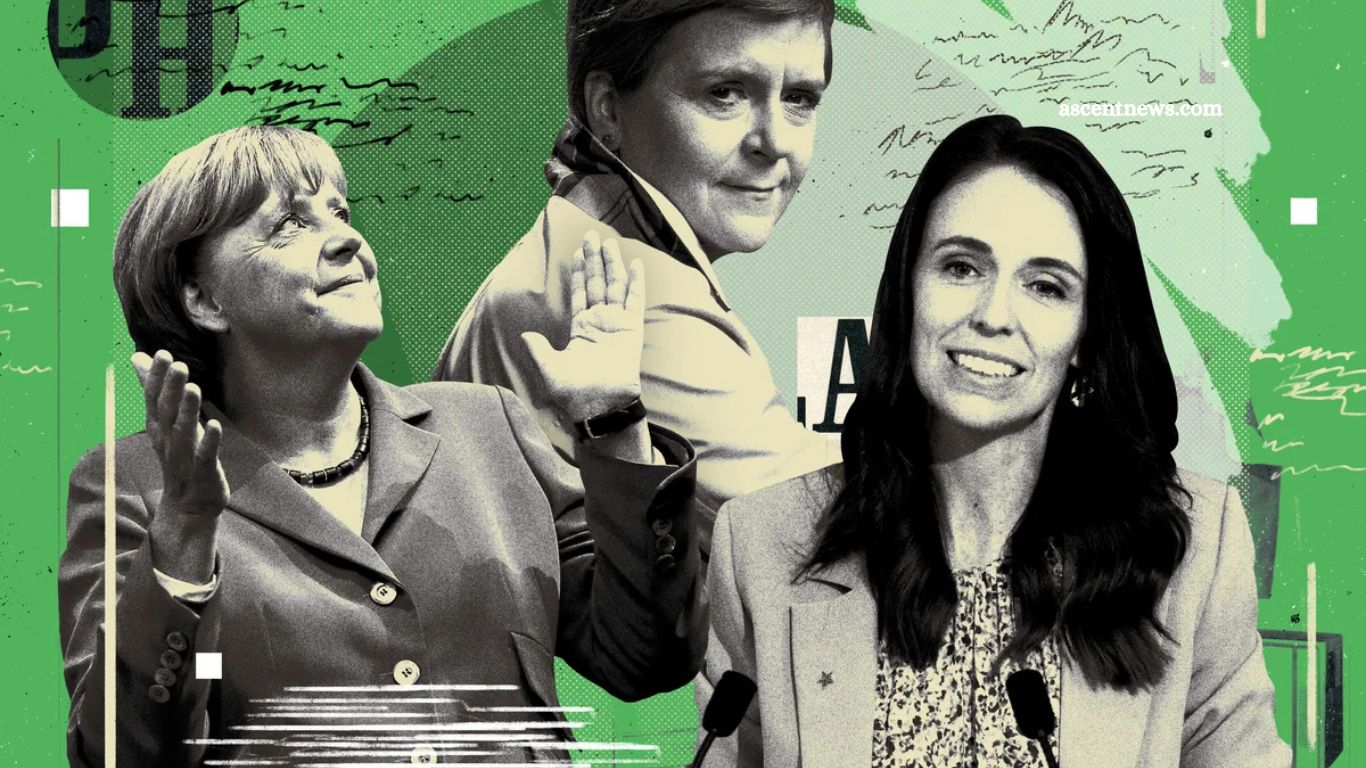
Nicola Sturgeon has never hidden her fear of failure. Yet, the failure she feared was not the absence of success—it was the inability to sustain it after a groundbreaking achievement. Becoming Scotland’s first female first minister, she admits in her new memoir, became “almost an obsession.” This intense pressure is familiar to many trailblazers. The first woman—or first minority—in any leadership role carries the weight of representation, knowing that skeptics may see them as a test case for whether “people like them” can lead effectively.
For women in power, every move is scrutinized. They must project strength while being urged to reveal personal struggles, from miscarriage and menopause—as Sturgeon has discussed—to pregnancy in high office, as Jacinda Ardern shared during her time as New Zealand’s prime minister. The unspoken demand is to be both an unshakable leader and an open book, breaking taboos while ensuring no one thinks leadership came “too easily.”
This dual role often turns political leaders into symbolic “everywomen,” expected to represent every female voter—even on divisive issues. In Sturgeon’s case, her stance on transgender rights, an issue that split public opinion, ultimately undermined her premiership. The burden of representation, while empowering, can also be a dangerous distraction from governing.
Read More: Mark Zuckerberg Redefines ‘Good Works’ on His Own Terms
A Trio of Female Leadership Icons
Sturgeon’s memoir joins those of Ardern and Germany’s former chancellor Angela Merkel, collectively marking the end of a political chapter in which many believed electing women would fundamentally change politics. At their peak, each was seen as a model of a kinder, more empathetic form of leadership. Merkel was celebrated for welcoming Syrian refugees in 2015; Ardern won international admiration for her compassionate handling of the Christchurch terrorist attack; and Sturgeon was hailed as the progressive, pro-European foil to Boris Johnson’s brash Brexit style.
For a time, they served as political role models even outside their own countries. During the 2015 UK election debates, Sturgeon’s strong performances prompted some English viewers to wonder if they could vote for the SNP from across the border. Merkel’s calm defiance against Donald Trump—captured in that iconic G7 summit image of her leaning over the table—was widely shared as a symbol of steady leadership. Ardern’s “zero-Covid” approach drew global attention for its decisiveness, at least before it faltered under new virus variants.
Yet admiration often turned to polarization. Sturgeon herself has acknowledged how quickly leaders become divisive figures, regardless of gender. The reality was clear: changing the leader’s gender didn’t erase the deep tribalism of politics. The fantasy that “if women ran the world, peace would prevail” was, in the end, just that—a fantasy.
Distance Versus Reality
English observers, myself included, sometimes admired Sturgeon’s leadership style from afar while overlooking her government’s shortcomings. The Scottish journalist Alex Massie noted this week how the view from London often romanticized Sturgeon in a way that many Scots did not. From a distance, it was easy to praise her measured pandemic briefings, which contrasted sharply with Boris Johnson’s erratic approach. I remember being impressed by Scotland’s attention to children’s needs during lockdown.
However, the pandemic’s outcomes told a more complex story. Scotland’s Covid death rates were not significantly better than England’s, and the UK Covid inquiry continues to investigate why. In New Zealand, Ardern struggled to meet her own targets on child poverty, proving that empathy and intent do not guarantee results. Even Merkel, often considered Europe’s steady hand, faced criticism for her handling of certain domestic issues, including climate policy and economic inequality.
The Danger of Pedestals
The lesson here is straightforward: placing women leaders on a pedestal because of their gender makes no more sense than tearing them down for it. Leadership should be judged on results, not symbolism. This does not diminish the importance of representation—after all, the first few women in any field face unique pressures—but it underscores the need for realistic expectations.
In that sense, figures like Kemi Badenoch, the current Conservative Party leader, may benefit from being the “third or fourth woman through the door.” Her gender, while historically notable, is not the central point of discussion—her policies and leadership style are. This shift is healthy for democracy. It suggests a future in which gender neither elevates nor diminishes a leader in the public eye.
The Legacy of the Pioneers
Even with their flaws, leaders like Sturgeon, Ardern, and Merkel have changed the landscape. They showed that women can lead countries through crises, stand firm on the global stage, and navigate the intense pressures of political life. They have also revealed the limitations of symbolic politics—proving that one leader, however talented, cannot single-handedly deliver a utopian vision.
Their true legacy may be the normalization of women in top positions. When the novelty wears off, and leaders are judged simply on their record, representation will have moved from exceptional to expected. The road to that point is paved with the successes, failures, and contradictions of the women who came first.
Nicola Sturgeon’s story is, in many ways, the story of this political era. It is about ambition, scrutiny, representation, and the complex reality of change. It is a reminder that leadership—whether by a man or woman—is ultimately about delivering results. And it is a call to move past the illusion that simply changing the person at the top will change everything.
The end of the “women in power will save us” narrative is not the end of progress. It is the beginning of a more mature political conversation—one in which leaders are judged not by their gender, but by their governance. And that may be the most important change of all.
Frequently Asked Questions
What does “Women in Power: The Change We Expected” mean?
It refers to the widespread belief that electing more women into leadership roles—such as prime ministers, presidents, or CEOs—would significantly transform politics and governance, often toward a more empathetic, fair, and collaborative style.
Did women leaders like Nicola Sturgeon, Jacinda Ardern, and Angela Merkel change politics?
Yes and no. They brought fresh perspectives, emphasized compassion in leadership, and inspired greater representation. However, they also faced the same political challenges, divisions, and policy constraints as their male counterparts.
Why do female leaders face extra scrutiny?
Women in power are often seen as symbolic “test cases” for their gender. This creates pressure to perform flawlessly while also sharing personal experiences, such as family life or health, to break taboos and inspire others.
What challenges are unique to being the first woman in a role?
The first female leader in any position often carries the burden of representing all women. They face heightened media attention, gender bias, and the unrealistic expectation to “prove” women can lead just as well—or better—than men.
Why did admiration for these leaders sometimes turn to criticism?
While initially celebrated, leaders like Sturgeon, Ardern, and Merkel became polarizing over time. Political opposition, controversial decisions, and the realities of governance eroded the early “halo effect” that often surrounds trailblazing figures.
Is putting women in power enough to change political culture?
Not entirely. Gender diversity is important, but systemic change requires structural reforms, inclusive policies, and a shift in political culture—not just a change in who holds the top job.
What is the lasting impact of these pioneering women leaders?
Their legacy lies in normalizing women in leadership, inspiring future generations, and showing that female leaders can navigate crises and command the global stage, even while facing intense scrutiny.
Conclusion
The rise of leaders like Nicola Sturgeon, Jacinda Ardern, and Angela Merkel marked a pivotal moment in modern politics, embodying both the promise and the limits of representation. Their successes proved that women can lead nations through crises, inspire global respect, and challenge traditional leadership norms. Yet, their experiences also revealed that gender alone cannot dismantle deep-rooted political divisions or solve systemic challenges.