

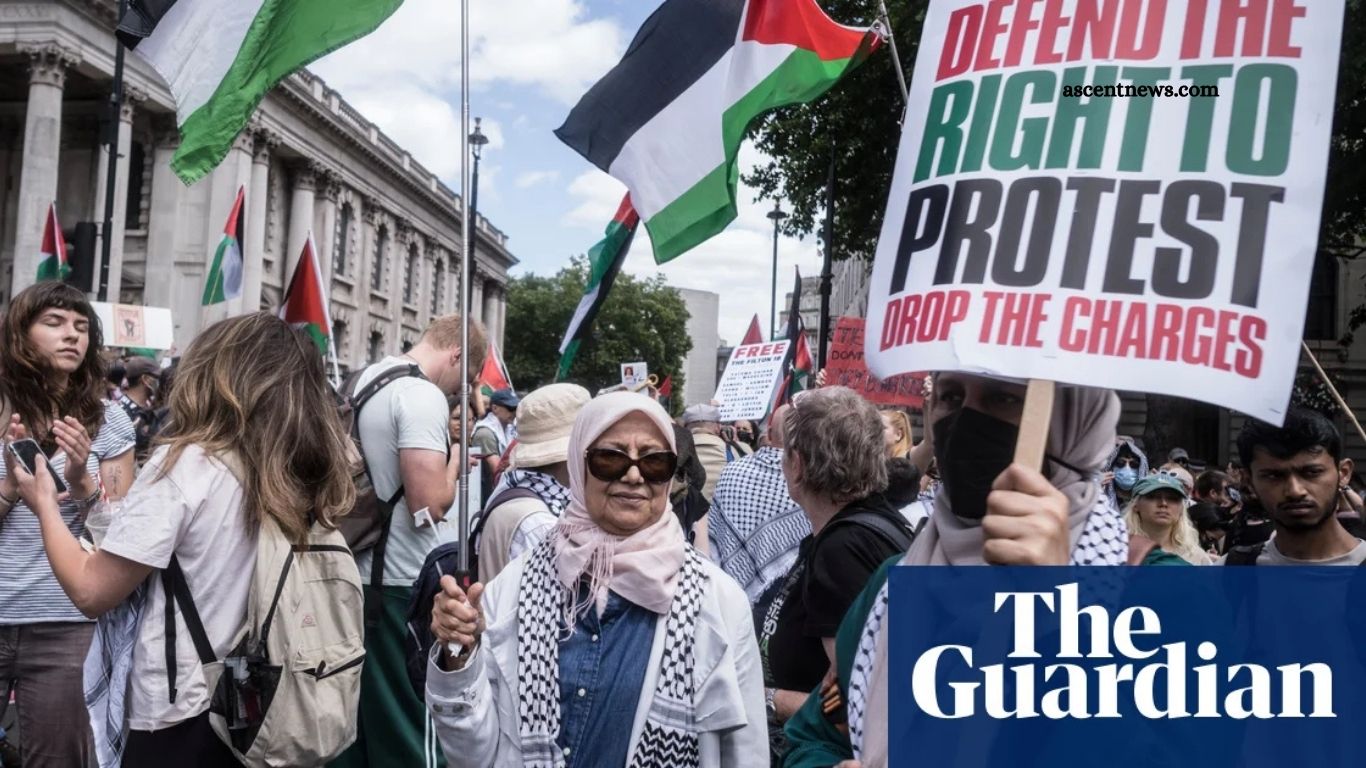
On June 20, two activists from Palestine Action spray-painted RAF aircraft at Brize Norton to protest British military collaboration with Israel. No harm was done to personnel, and the act may at most be deemed trespass or minor criminal damage. Yet, the UK government’s swift move to proscribe the organization as a terrorist group is an unprecedented step that has raised alarms about civil liberties, the future of protest, and the state of democracy in Britain.
The Brize Norton Incident: What Happened
At the heart of the controversy is an act of protest. Two individuals entered a Royal Air Force base and defaced two military aircraft—RAF Voyagers regularly flying to Cyprus’s Akrotiri base. This protest was a symbolic act meant to spotlight British complicity in Israel’s military operations in Gaza.
Notably, there were no threats, weapons, or injuries. The protest was dramatic but non-violent. Despite this, the UK Home Secretary’s decision to proscribe Palestine Action under anti-terror legislation marks a sharp turn from standard legal proceedings.
Read More: Essential Element for the Perfect Child-Friendly Summer: Generous Public Spaces
Criminality vs. Terrorism: Drawing the Line
Former Justice Secretary Lord Falconer has openly criticized the government’s response, stating that the group’s actions, while potentially criminal, do not meet the threshold for proscription under terrorism laws. Legal experts agree that criminal damage or trespass cannot and should not be equated with terrorism—especially in the absence of violence or threats to life.
Proscription is a severe step usually reserved for organizations that pose a direct threat to public safety through violent means. Applying this framework to non-violent protest groups may set a dangerous precedent, potentially criminalizing peaceful dissent and curbing public discourse.
Protest in Historical Context: A Legacy of Resistance
Palestine Action’s methods are rooted in a long and proud history of British protest movements. From the Greenham Common Women’s Peace Camp in the 1980s to the more recent actions of Extinction Rebellion, civil disobedience has been a powerful tool for change in the UK.
Even Labour leader Keir Starmer once defended anti-war protesters in court—arguing that while laws may have been broken, the moral cause behind the actions justified their stance. The UK’s democratic fabric has long allowed room for disruption as a form of free expression. Silencing such movements now risks undermining the core values on which Britain’s democracy was built.
Palestine Action: Who They Are and What They Do
Founded more than five years ago, Palestine Action is a decentralized network of activists committed to direct, non-violent action against entities linked to the Israeli military-industrial complex. A major focus of their activism is Elbit Systems—Israel’s largest arms company.
The group claims several victories, including the shutdown of multiple Elbit factories in the UK. Their tactics, while confrontational, remain largely peaceful and property-focused. Members include teachers, healthcare workers, students, and everyday citizens who refuse to remain silent in the face of what they view as complicity in war crimes.
Smear Campaigns and the Politics of Fear
As is often the case with grassroots movements challenging powerful interests, Palestine Action has faced smear campaigns. Allegations of being funded by Iran or acting as a proxy for Hamas are widespread but unsubstantiated. These narratives serve to discredit activists and distract from the core issue: British complicity in Israel’s military actions.
Branding civil disobedience as terrorism is a deliberate political move to delegitimize protest. By invoking fear, the government seeks to justify sweeping actions that would otherwise be indefensible in a democratic society.
British Complicity in Gaza: The Unspoken Truth
The real reason behind Palestine Action’s protest at Brize Norton lies in Britain’s military relationship with Israel. RAF Akrotiri has reportedly been used for surveillance flights over Gaza—flights believed to aid Israeli military operations, including during the current war, which has seen immense civilian suffering.
Hospitals, schools, and homes have been decimated in Gaza. The International Court of Justice has issued warnings and even initiated proceedings concerning allegations of genocide. In this context, the UK’s silence—or worse, active support—is ethically and legally troubling. The protest aimed to break that silence.
The Dangers of Proscribing Protest
Banning Palestine Action under terrorism laws sends a chilling message to activists across the UK: peaceful protest can now be deemed terrorism. If accepted, this legal overreach could pave the way for banning other protest groups, from climate activists to trade unionists.
This is not just about Palestine Action. It’s about protecting the right to dissent, speak truth to power, and demand accountability without fear of persecution. Democracy is not just about voting—it’s about active, engaged citizenship, including the right to protest.
The Role of Parliament: A Test of Democratic Integrity
Now, the spotlight turns to Parliament. Will it rubber-stamp the Home Secretary’s order, or will it push back against this authoritarian drift? History urges caution. Previous governments have also faced backlash for overstepping boundaries, especially when it came to curtailing civil liberties.
Parliament must carefully consider the long-term implications of this decision. The line between security and suppression is thin—and it’s dangerously close to being crossed.
Frequently Asked Questions
What is Palestine Action?
Palestine Action is a UK-based activist network focused on disrupting companies and facilities that supply arms or technology to the Israeli military, particularly Elbit Systems.
Is Palestine Action a terrorist group?
No. The group uses non-violent direct action. While some actions involve trespassing or property damage, legal experts and human rights defenders argue these do not constitute terrorism.
Why was Palestine Action protesting at Brize Norton?
They aimed to expose British military collaboration with Israel, particularly surveillance operations over Gaza during a humanitarian crisis.
What is proscription under UK law?
Proscription means a group is officially banned under anti-terror legislation. Members can be arrested, and association with the group becomes a criminal offence.
What is the legal basis for challenging proscription?
Legal challenges can be made on the grounds that the group does not meet the terrorism threshold. Past cases have shown that peaceful activism cannot be legally equated with terrorism.
Who supports Palestine Action?
The group has support from academics, lawyers, human rights campaigners, and ordinary citizens across the UK. Prominent figures like Suresh Grover, a veteran civil rights campaigner, have publicly backed their cause.
Is Britain complicit in Israel’s military actions?
While the UK government denies direct involvement, its arms exports and intelligence-sharing with Israel raise ethical and legal concerns—especially in light of potential war crimes in Gaza.
What happens if Parliament approves the ban?
Thousands of activists could face criminal prosecution. It may also trigger wider suppression of protest movements, leading to reduced democratic freedoms in the UK.
Conclusion
The decision to proscribe Palestine Action is about more than one activist group—it’s about the future of protest, democratic accountability, and civil liberties in Britain. Peaceful resistance has always been a hallmark of just societies. Silencing that resistance in the name of security is a betrayal of those very values.
History will judge whether Parliament chose fear over freedom. In moments of great moral crisis, neutrality aids the oppressor. Will the UK stand with justice and dissent, or slide further into authoritarianism? The choice lies ahead—and it must be made wisely.