

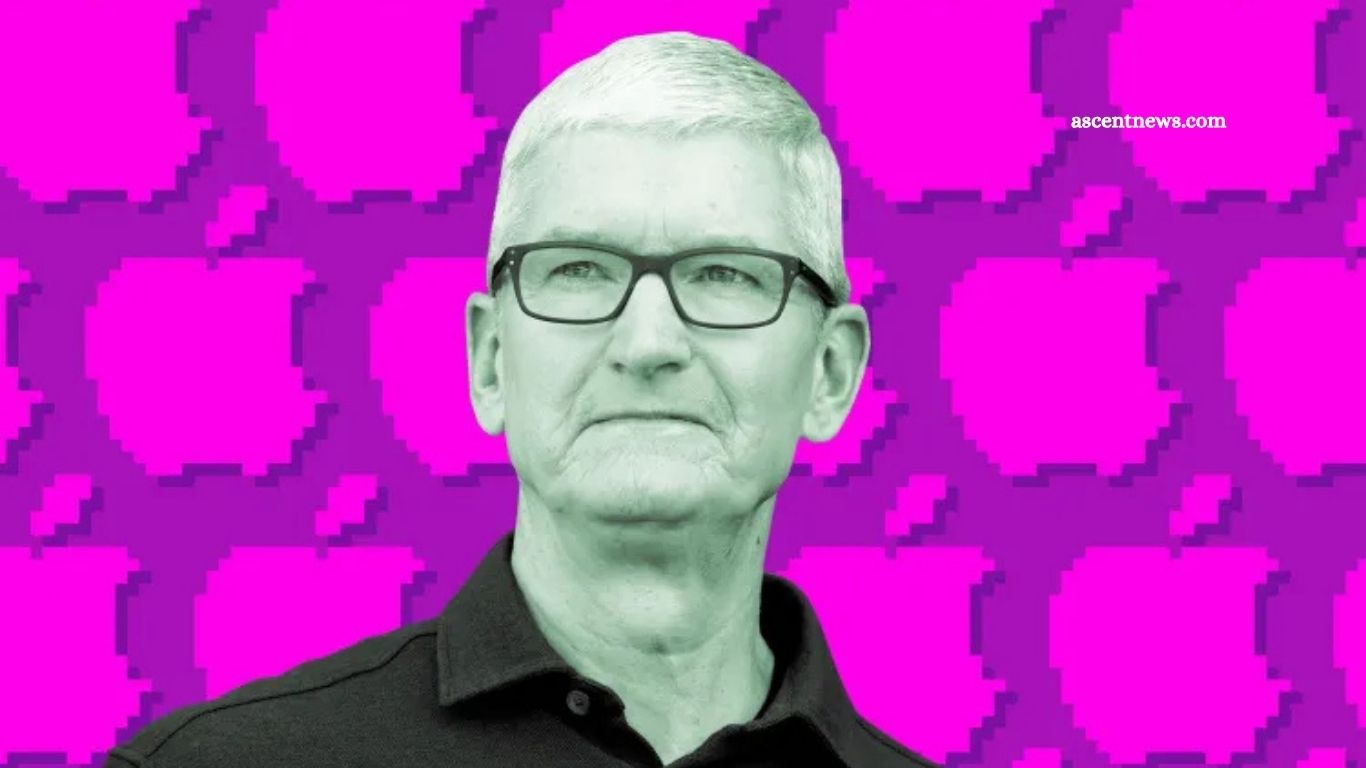
Apple CEO Tim Cook has made it clear that artificial intelligence is now a top strategic priority for the company. In a recent internal address, Cook emphasized that Apple is fully committed to advancing AI and is prepared to make significant investments to lead in this space.
While competitors like Google and Microsoft have moved quickly with generative AI, Cook insists Apple’s approach will focus on quality, privacy, and seamless integration across its ecosystem. With upcoming innovations expected at WWDC, Apple’s AI push signals a transformative shift aimed at keeping the company at the forefront of the tech industry.
AI: The Next Major Platform Shift
Speaking to Apple staff at the on-campus auditorium, Cook described artificial intelligence as a technological revolution that rivals or surpasses previous paradigm shifts, including the internet, smartphones, cloud computing, and mobile applications.
“Apple must do this. Apple will do this. This is sort of ours to grab,” said Cook, emphasizing both the opportunity and responsibility Apple sees in AI development. “We will make the investment to do it.”
Cook’s remarks underscore a pivotal shift for the company. Historically cautious in rolling out new technologies, Apple is now signaling a proactive stance on AI, aiming to shape the future rather than follow it.
Read More: Apple Claims Trump Tariffs Add \$1 Billion to Operating Costs
Late to the AI Race, But Not Out
Despite Apple’s market dominance in hardware and software, it has been relatively slow to release generative AI features compared to rivals like Google, Microsoft, and OpenAI. The delay has raised concerns among analysts and investors, especially as competitors rapidly integrate AI into their ecosystems.
Apple’s flagship voice assistant, Siri, was originally a pioneering product in voice-based AI. However, it has lagged behind more advanced systems powered by large language models (LLMs). Earlier this year, Apple reportedly postponed a major AI-powered upgrade to Siri, frustrating users and developers eager for smarter capabilities.
A New Approach to Siri and AI Architecture
Craig Federighi, Apple’s Senior Vice President of Software Engineering, also addressed employees during the meeting. He acknowledged the delay in launching a more advanced version of Siri and shared insights into the challenges behind the scenes.
Federighi revealed that Apple initially planned to use a hybrid architecture for Siri. This system would combine the current Siri functionalities with new capabilities powered by large language models. However, Apple realized that the hybrid model would not meet the company’s stringent standards for quality and performance.
“We realized that approach wasn’t going to get us to Apple quality,” Federighi explained. “The new plan is to move everything to a new architecture.”
This new AI architecture is expected to provide a more seamless, intelligent, and context-aware experience. Though details are still emerging, the transition could significantly reshape Siri and other Apple services, bringing them closer to state-of-the-art conversational AI.
Apple’s AI Strategy: Learn, Refine, Lead
Tim Cook acknowledged that Apple has rarely been first to market with new technologies. The company was not the first to launch personal computers, smartphones, tablets, or MP3 players. However, in each category, Apple eventually introduced versions that defined the modern standard.
“This is how I feel about AI,” Cook told staff, suggesting that while Apple may be behind the curve today, it intends to deliver a superior, user-centric AI experience in the near future.
Apple’s AI strategy appears to focus on deeply integrating AI across its ecosystem rather than rushing to compete in the chatbot arms race. This approach aligns with Apple’s reputation for delivering polished, privacy-conscious features tailored to everyday users.
Open to Acquisitions, Despite Talent Losses
The all-hands meeting came on the heels of Apple’s earnings call, where Cook said the company is “open to” acquiring other firms to accelerate its AI roadmap. This openness signals a pragmatic shift in Apple’s usually conservative acquisition strategy, especially in areas requiring fast innovation.
At the same time, Apple is facing pressure from fierce competition for AI talent. Meta, through its “superintelligence” division, has reportedly poached several high-level engineers and researchers from Apple. The talent drain adds urgency to Apple’s internal AI development and hiring strategies.
WWDC 2025: A Critical Moment for AI at Apple
Industry watchers expect Apple to showcase major AI features at its Worldwide Developers Conference (WWDC) in 2025. Analysts speculate that a revamped Siri, AI-powered productivity tools, and on-device machine learning enhancements will be center stage. Given Apple’s emphasis on privacy, these features are likely to run locally rather than relying heavily on cloud-based processing.
There is also speculation that Apple may unveil its own generative AI model or announce deeper integrations with partners in the AI space. Regardless of the specifics, WWDC 2025 could mark a turning point in how AI fits into Apple’s product ecosystem.
What Sets Apple Apart in AI?
While many tech companies have jumped headfirst into generative AI, Apple’s approach reflects its long-standing commitment to user experience, security, and design. The company is unlikely to launch a public chatbot or generalized AI tool without ensuring it meets high performance and privacy standards.
Instead, Apple’s strength may lie in embedding AI across its hardware and software, enhancing user interactions without requiring a steep learning curve. Features like predictive text, intelligent photo search, and health monitoring already use machine learning. The next wave of Apple AI may bring real-time translation, advanced automation, and context-sensitive assistance to iOS and macOS.
Frequently Asked Questions
What did Tim Cook say about Apple and AI?
Tim Cook stated that Apple “must figure out AI” and affirmed the company “will make the investment to do it.” He emphasized Apple’s commitment to advancing artificial intelligence as a core priority moving forward.
Why is AI important for Apple now?
AI is viewed as a major platform shift, much like the internet or the smartphone. Cook acknowledged that Apple must evolve to stay competitive and lead in this new era of intelligent computing.
How does Apple plan to invest in AI?
Apple plans to invest in talent, infrastructure, and technology—including developing its own AI models, upgrading Siri, and integrating AI deeper into its hardware and software ecosystem.
Is Apple behind other tech giants in AI?
Yes, Apple has been slower to release generative AI products compared to companies like Google, Microsoft, and OpenAI. However, Tim Cook suggests Apple is taking a deliberate approach to deliver a high-quality, privacy-focused experience.
What changes are coming to Siri?
According to Craig Federighi, Apple is rebuilding Siri using a new architecture that incorporates advanced AI capabilities. This could make Siri significantly more intelligent and conversational.
When will users start seeing Apple’s new AI features?
Major AI enhancements are expected to be revealed at WWDC 2025, including a revamped Siri and system-wide AI tools integrated into iOS, macOS, and Apple hardware.
How is Apple handling AI-related privacy concerns?
Apple is likely to emphasize on-device AI processing to protect user data, aligning with its long-standing commitment to privacy and security.
Conclusion
Tim Cook’s declaration that Apple “must figure out AI” and “will make the investment to do it” marks a pivotal moment in the company’s evolution. While Apple may have taken a measured approach compared to its competitors, its focus on quality, integration, and privacy positions it to make a lasting impact in the AI space. With major advancements expected in the coming year—especially around Siri and system-wide intelligence—Apple is clearly preparing to lead in the next wave of innovation.