

Some people can distinguish fine wine from average—attending tastings, touring vineyards, and spending big for the experience. I’m not one of them. I can barely tell wine from vinegar unless I see the label. But when it comes to keyboards, I’m obsessed.
For the past few months, I’ve been typing on the Norbauer Seneca, a fully custom, electro-capacitive keyboard that starts at $3,600—and might just be the finest keyboard ever made. I’ve had others try it, too, including people who see keyboards as basic tools. My wife, for example, uses a mechanical keyboard only because I gave her one. Replace it with a $30 Logitech, and she wouldn’t mind. I put the Seneca on her desk. She said it was “fine.” Then she went right back to her old keyboard.
To the average user, the Seneca might not seem special. But for those of us who care deeply about keyboards, it’s nothing short of extraordinary.
Read More: Microsoft Mistakenly Replaces Windows 11 Startup Sound with Vista’s
How to build the best keyboard in the world
Ryan Norbauer’s journey to create the Seneca is detailed in a separate piece, but here’s the short version: this isn’t just another custom keyboard. Evolving from his Topre aftermarket housings, the Seneca is a fully bespoke board—every part is proprietary, housed in a metal chassis crafted with obsessive precision and hand-assembled in Los Angeles by a team of well-known keyboard enthusiasts.
It’s incredibly heavy, unapologetically expensive, and delivers a typing experience that only true keyboard connoisseurs will fully appreciate.
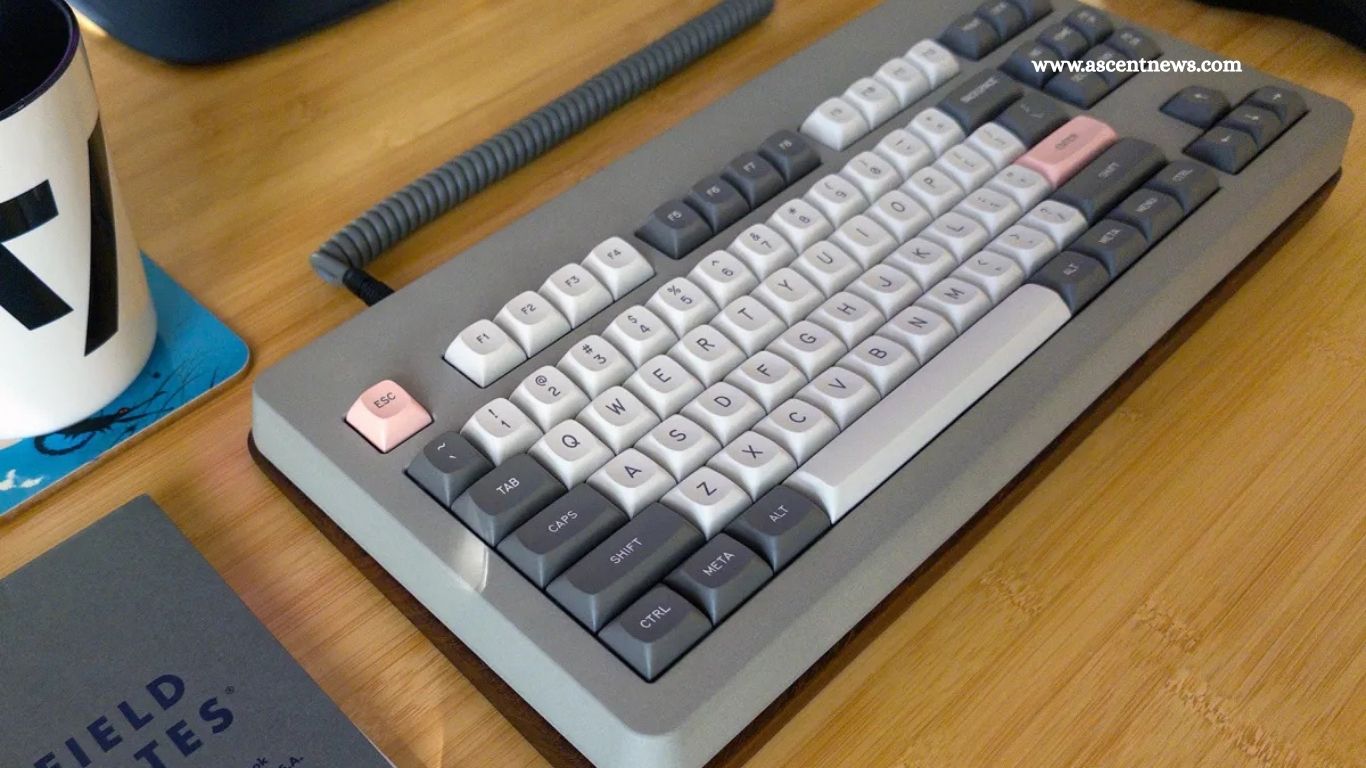
The Seneca feels permanent—almost architectural. Weighing nearly seven pounds, it resembles smooth concrete or weathered stone. Its milled aluminum body features a plasma-ceramic oxidized finish: textured in appearance, yet silky to the touch. There’s no grip underneath; it’s designed to live on your desk, not move around.
The switches and stabilizers, developed in-house by Norbauer & Co., are exclusive to the Seneca—and they’re the main reason I had to try it. Simply put, they’re phenomenal.
Norbauer Seneca Review: The Ultimate $3,600 Keyboard for Hardcore Enthusiasts
The Norbauer Seneca isn’t your average mechanical keyboard. Priced at an eye-watering $3,600, it’s less about features and more about uncompromising craftsmanship, tactile excellence, and design purity. If you’re the kind of person who values the deep “thock” of a perfectly tuned board over RGB lights or wireless convenience, the Seneca might just be your dream keyboard.
Precision-Built Switches Inspired by Topre—But Better
At the heart of the Seneca is a custom electro-capacitive switch that draws clear inspiration from the legendary Topre design, found in keyboards like the Happy Hacking Keyboard. But Norbauer’s implementation improves upon it in several critical ways.
These switches are smoother, more stable, and deliver a richer, deeper acoustic profile. Unlike traditional Topre switches, the Seneca’s are designed specifically to support MX-style keycaps. This dramatically expands compatibility with the massive world of aftermarket Cherry-profile keycaps—a huge win for customization enthusiasts.
World-Class Stabilizers That Redefine “Smooth”
The Seneca’s stabilizers are nothing short of engineering art. Developed entirely in-house, they took years to perfect. They’re complex, finicky to assemble, and completely overengineered—but the payoff is worth it.
There’s zero rattle, no ticking, and a rock-solid spacebar that lands with a satisfying thunk. These stabilizers don’t just compete with industry standards—they obliterate them.
A Typing Experience That’s Hard to Forget
Typing on the Seneca is pure joy. The switches feature a pronounced tactile bump at the top, followed by a smooth press and a crisp return. The medium-weight variant in the review unit mimics the feel of 45g Topre switches, but lighter and heavier options are available to suit individual preferences.
These switches aren’t fully silenced, but they’re extensively dampened. Silicone rings cushion the upstroke, while a layer between the switch and PCB absorbs the downstroke and eliminates coil crunch. Additional gaskets and dampers throughout the chassis further reduce vibration and ping.
The result? A soft, vintage-inspired thock that’s incredibly satisfying. One Verge editor compared the sound to raindrops—and he didn’t even read the marketing copy that said the same thing.
A Solid Build That Feels Monumental
The Seneca weighs nearly seven pounds. Crafted from milled aluminum with a plasma-ceramic oxidized finish, it feels more like a piece of industrial design than a peripheral. It’s tactile, cool to the touch, and dead silent on the desk—partly because there’s no rubber grip on the bottom. It’s not meant to move. This is a keyboard that stays put.
Inside, a brass switch plate, custom gaskets, and dense damping materials add structural rigidity while also shaping its signature sound profile.
Firmware Limitations (for Now)
The Seneca’s Edition Zero comes with closed-source firmware, which unfortunately doesn’t support hardware key remapping. While software tools like Karabiner-Elements (Mac) and PowerToys (Windows) offer a temporary fix, it’s a noticeable omission for power users who rely on custom layers and shortcuts.
Thankfully, Norbauer is already working with electrocapacitive PCB expert Luca Sevá (a.k.a. Cipulot) to develop open-source firmware. The final production version is expected to ship with full remapping capabilities, correcting this early shortfall.
Unique Design Choices and Ergonomics
One polarizing feature is the Lemo connector for the cable. It looks premium and fits the board’s aesthetic, but it also means you’ll need to swap cables if you frequently switch keyboards. Norbauer is addressing this with an optional Lemo-to-USB-C dongle, which wasn’t ready during testing.
Ergonomically, the Seneca uses a completely flat typing angle—unusual among mechanical keyboards, which typically slant between 3 and 11 degrees. Flat or negative angles are actually better for wrist health. For those who prefer a tilt, Norbauer offers an optional hardwood riser that adds a three-degree incline. Place it backward, and you get a negative angle. Either way, it subtly changes how your fingers interact with the keys—and it might ruin you for other boards.
How Does It Stack Up Against Everyday Keyboards?
Functionally, the Seneca does less than most $100 boards. No wireless, no RGB, no volume knob, and—at least for now—no hardware remapping. It lacks hot-swappable switches, and you can’t even plug it in with a standard cable.
So, is it worth $3,600?
For the average user, absolutely not. But this isn’t a board for the average user. It’s a statement piece for keyboard obsessives—people who care deeply about sound profile, switch feel, and build quality. People who already own five to ten mechanical keyboards and want something truly special.
Friends and family who tested it said it felt great and looked cool, but none of them were blown away. If you’re not a keyboard nerd, you might wonder where the number pad went. If you are, you’ll recognize what makes the Seneca exceptional.
Not the Only Option—But Maybe the Most Unique
You don’t need to spend $3,600 to get a great keyboard. There are incredible off-the-shelf options under $100, like the Keychron K-series. Build-it-yourself kits let you choose your own switches, keycaps, and stabilizers. You could even buy a Realforce for around $250 and get that Topre magic that inspired the Seneca in the first place.
But what you won’t get is the singular blend of artistry, engineering, and obsession that defines the Seneca. This is a board for people who know exactly what they want—and who are willing to pay for it.
Frequently Asked Questions
What is the Norbauer Seneca keyboard?
The Norbauer Seneca is a fully custom, luxury mechanical keyboard priced at $3,600. It features proprietary electro-capacitive switches, exclusive stabilizers, a solid aluminum chassis, and is hand-assembled in Los Angeles.
Why does the Norbauer Seneca cost $3,600?
The high price reflects its artisanal craftsmanship, custom-developed components (including switches and stabilizers), rare materials, limited production, and premium finishes like plasma-ceramic oxidation. It’s built as a collector-grade keyboard, not a mass-market product.
What switches does the Norbauer Seneca use?
It uses in-house developed electro-capacitive switches inspired by Topre but redesigned for smoother feel and MX keycap compatibility. They offer a deep, tactile response with minimal rattle and noise.
Can I customize the Norbauer Seneca layout or keymap?
The Edition Zero uses closed firmware with no onboard remapping. However, future editions will include open-source firmware that supports full key remapping. Software tools like Karabiner (Mac) or PowerToys (Windows) can offer temporary solutions.
Is the Norbauer Seneca hot-swappable?
No, the Seneca is not hot-swappable. It’s a fully soldered, electro-capacitive board with proprietary switches designed specifically for this model.
Does the Seneca support wireless connectivity or RGB lighting?
No. The Seneca is a wired-only keyboard with no RGB backlighting. It’s focused entirely on build quality, typing feel, and acoustic performance—not extra features.
What makes the Norbauer Seneca better than other high-end keyboards?
It stands out for its proprietary components, unique acoustic tuning, hand-finished construction, and ultra-solid build. Every detail—from switch design to finish—is developed from scratch with obsessive attention to quality.
Is the Norbauer Seneca worth the price?
For most users, no. But for hardcore keyboard enthusiasts, collectors, or audiophile-level typists, the Seneca delivers a unique, tactile, and acoustically rich experience that can justify the premium.
Where is the Norbauer Seneca manufactured?
Each unit is hand-assembled in Los Angeles, California, by a team of experienced keyboard builders and enthusiasts.
Can I still buy the Norbauer Seneca?
Availability is extremely limited. Norbauer often releases small production runs or pre-orders. Check the official Norbauer website for updates on availability and lead times.
Conclusion
The Norbauer Seneca isn’t just a mechanical keyboard—it’s a handcrafted expression of perfectionism. From its proprietary electro-capacitive switches and ultra-smooth stabilizers to its monolithic aluminum chassis and architectural aesthetics, every detail reflects obsessive engineering and artistry.
At $3,600, it’s not for casual users. There’s no RGB, no wireless, and no gimmicks—just uncompromising design and an unmatched typing experience. For collectors and enthusiasts who crave tactile nuance and sound perfection, the Seneca is more than a tool—it’s a lifelong centerpiece.