

The Philippines consistently ranks as the world’s top marine plastic polluter. Studies, including Meijer et al. (2021) reported in Our World in Data, show the country contributed the largest share of ocean plastic waste in 2019. Viral social media posts have highlighted how the Philippines, along with other Asian nations, produces significantly more ocean plastic than much of the world combined.
Plastic waste in the Philippines mainly leaks from industrial zones, residential areas, and rivers. Mismanaged Plastic Pollution, especially packaging, gets dumped along riverbanks and flows to the sea. Of the world’s 10 most plastic-polluted rivers, seven are in the Philippines—led by the Pasig River, which overtook China’s Yangtze River in 2017.
Although recycling and upcycling are ingrained in Filipino culture, they can’t solve the plastic crisis alone. The country faces overproduction and overreliance on plastic, particularly cheap, single-use sachets. Poverty plays a key role—eco-friendly alternatives are either unavailable or unaffordable, forcing many to depend on plastic products. Corporations exploit this reality by pushing a “sachet economy,” with plastic-packaged goods dominating local sari-sari stores.
The Philippines generates roughly 2.3 million tonnes of plastic waste annually, out of a global total of 400 million tonnes in 2024. Alarmingly, only 9% of that is recycled. Beyond domestic issues, the country also faces “waste colonialism”—accepting waste imports from wealthier nations like the U.S. and U.K. in exchange for aid. The question remains: where does all this waste truly end up?
Read More: The True Threat of This Permacrisis: A Future Where Nothing Changes
Landfills, Waste Leakage, and the Informal Sector in the Philippines
Overflowing and poorly managed landfills remain a major waste challenge in the Philippines. In Cebu City, nearly all waste ends up at the Inayawan and Binaliw landfills, which receive mixed biodegradable, recyclable, and residual waste from homes, businesses, and industries. Inayawan, closed in 2018, was deemed a public health hazard by the Department of Health and was shut down following a Supreme Court writ of Kalikasan. Similarly, Quezon City’s Payatas landfill, once the country’s largest open dump, was notorious for severe environmental and social issues before its closure.
Despite existing laws like the Ecological Solid Waste Management Act of 2000, poor enforcement and excessive plastic production continue to drive mismanaged waste. In cities, local governments often contract low-income individuals to handle street cleaning and garbage disposal for pay far below the national minimum wage. Many who live near dumpsites rely on scavenging—repurposing discarded materials or even food—to survive.
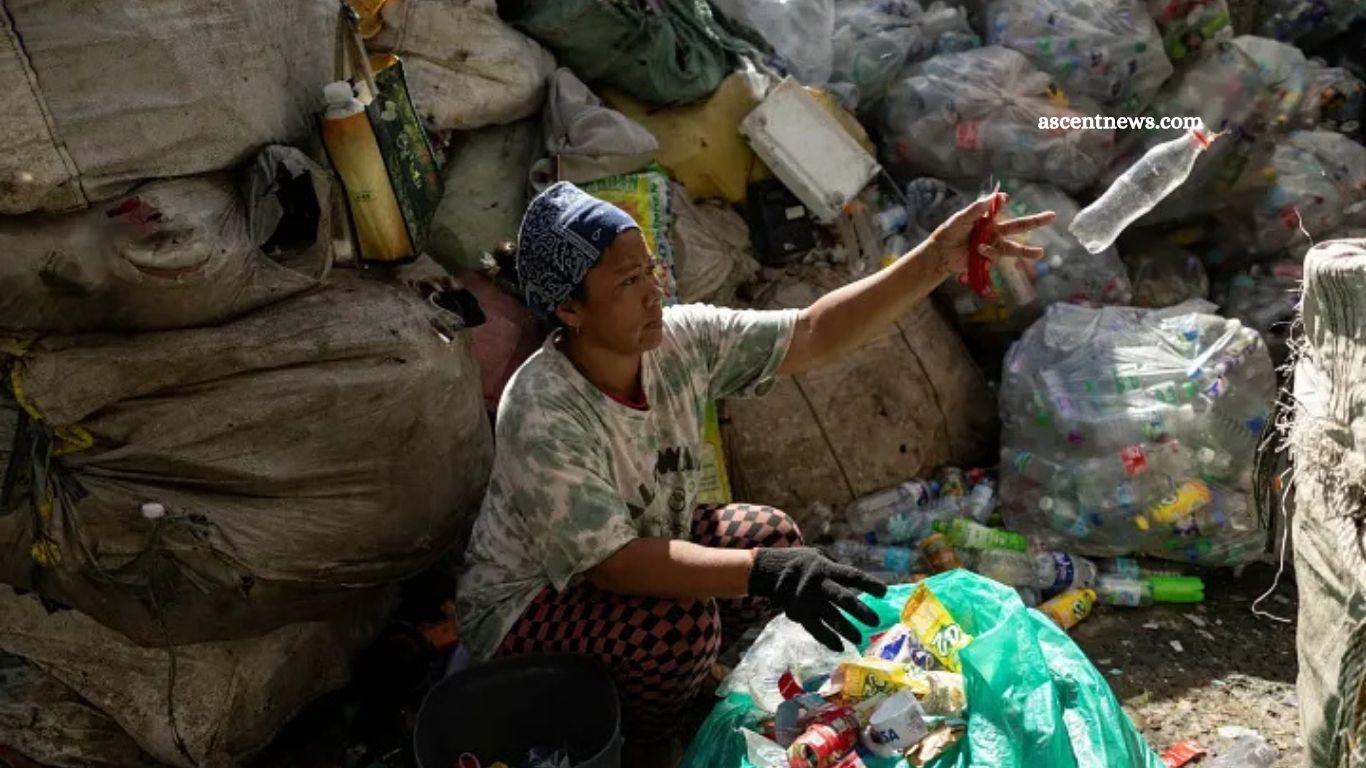
These individuals form the backbone of the informal waste sector—waste pickers, recyclers, and collectors who operate without recognition or fair compensation. Often unpaid, they recover and sort waste before it reaches landfills, preventing leakage into rivers and oceans. In countries like Vietnam and Indonesia, the informal sector collects the majority of recyclable plastic waste.
Despite their critical role, these workers remain unrecognized and marginalized. There is an urgent need to revise national waste management policies to formally integrate and protect the informal sector, ensuring fair treatment and sustainable livelihoods.
Policy Interventions and Gaps in Waste Management Reform
Republic Act No. 9003, the Ecological Solid Waste Management Act of 2000, is widely recognized as strong legislation aimed at improving waste segregation, collection, treatment, and disposal in the Philippines. It outlines a comprehensive waste management program, encouraging resource conservation, waste reduction, and circular practices through institutional support and incentives.
Section 10 decentralizes responsibility, empowering local government units (LGUs) to lead waste management in their areas. Barangays are tasked with waste segregation and collection. Sections 11 and 12 integrate stakeholder representation—recycling industry and NGO representatives sit on provincial, city, and municipal waste boards. These provisions, to some extent, recognize community and informal sector contributions to the implementation of the law.
However, these efforts fall short in formally recognizing the informal waste sector—a critical but overlooked component of the country’s waste system. Inclusion remains at the discretion of LGUs, and representation on waste boards often hinges on formal affiliations, leaving informal workers excluded from decision-making structures.
Section 45 of the Act introduces an incentive system for innovative projects in waste management. Yet, incentives are geared toward LGUs, enterprises, and NGOs, with no explicit inclusion of informal workers, making their eligibility ambiguous. This legal gap marginalizes the very people most active in waste collection and recycling.
Comparatively, South Korea’s Fishing Gear Deposit Refund System (FGDRS), implemented by FIRA, offers a model worth exploring. It incentivizes fisherfolk to return used fishing gear, rewarding them through direct bank transfers—promoting circularity in coastal communities. Similar models could be adapted to empower waste workers in the Philippines.
The passage of R.A. 11898, the Extended Producer Responsibility (EPR) Act of 2022, which amends R.A. 9003, shifts accountability to plastic producers. While both laws are comprehensive and well-crafted, they still lack mechanisms to integrate and protect the informal sector. Weak implementation, vague guidelines, and poor enforcement hinder their effectiveness. Moreover, limited stakeholder engagement, especially among marginalized communities, further undermines the inclusive potential of these laws.
Without stronger regulatory oversight, updated implementation rules, and meaningful inclusion of grassroots actors, the country risks failing to realize the full potential of its waste management framework.
The Global Plastics Treaty and Pathways for the Philippines
In 2022, the adoption of UNEA Resolution 5/14 launched the negotiation of a legally binding global treaty to tackle plastic pollution, including in marine environments. Since the first Intergovernmental Negotiating Committee (INC) session in 2023, momentum has grown, with increased engagement from civil society and the informal waste sector—a group responsible for over 60% of global plastic waste collection and recycling.
The Philippines has played a strong role in these talks, actively contributing technical recommendations and joining the High Ambition Coalition to End Plastic Pollution. At the fifth INC session in South Korea in November 2024, the country aligned with key statements by Rwanda and Panama, reinforcing its commitment to a treaty that covers the full life cycle of plastics—from production to disposal.
Despite this involvement, no Filipino informal waste workers were represented at any session, raising serious concerns. This exclusion is not just a matter of funding or accreditation—it reflects a deeper issue: the continued institutional neglect of the informal sector, both in global dialogues and national policies. This omission threatens the local implementation of global treaty commitments and weakens existing laws like R.A. 9003 (Ecological Solid Waste Management Act) and R.A. 11898 (Extended Producer Responsibility Act).
The informal sector remains unrecognized in law, yet it forms the backbone of Philippine waste management. These workers—waste pickers, recyclers, and collectors—are often unpaid, unprotected, and marginalized, despite being essential to preventing environmental collapse in both urban and rural areas.
Recognition must come first. Legal institutionalization, fair compensation, and the formal inclusion of informal workers are long overdue. Updating key legislation to incorporate their roles will ensure stronger implementation of national laws and global treaty obligations. As the final treaty is expected in August 2025, successful integration in the Philippines depends on inclusive, people-centered policies that empower—not exclude—those doing the most work.
From informal to formal, and from ignored to empowered, this shift is essential for a just, sustainable future in waste management.
Frequently Asked Questions
Why is the Philippines a top contributor to marine plastic pollution?
The Philippines generates over 2.3 million tonnes of plastic waste annually, with much of it leaking into waterways due to poor waste management systems, insufficient infrastructure, and overreliance on single-use plastics. Many rivers, including the Pasig River, are among the world’s most plastic-polluted.
What are the main causes of weak waste systems in the Philippines?
Key issues include underfunded and poorly managed landfills, lack of proper segregation at the source, inadequate enforcement of existing laws like R.A. 9003, and limited access to affordable, sustainable packaging alternatives.
How does plastic pollution affect local communities?
Plastic waste clogs waterways, increases flood risks, harms marine life, and poses health hazards—especially for low-income communities living near dumpsites. It also threatens livelihoods, particularly for fisherfolk and farmers.
What role does the informal waste sector play in plastic waste management?
The informal sector—including waste pickers, recyclers, and collectors—handles a significant portion of plastic recovery and recycling in the Philippines. Despite their essential contribution, they remain largely unrecognized and unsupported by law.
What laws currently address waste management in the Philippines?
The Ecological Solid Waste Management Act of 2000 (R.A. 9003) and the Extended Producer Responsibility Act of 2022 (R.A. 11898) are key laws. They promote segregation, recycling, and corporate accountability but fall short in formally integrating the informal sector.
How can we strengthen waste management systems in the Philippines?
Improvements include better enforcement of waste laws, investment in infrastructure, formalizing the role of the informal sector, banning single-use plastics, promoting circular economy initiatives, and raising public awareness on waste reduction.
What is the global plastics treaty, and how is the Philippines involved?
The treaty, under negotiation since 2022 through the UN Environment Assembly (UNEA), aims to create a legally binding agreement to end plastic pollution. The Philippines is an active participant and a member of the High Ambition Coalition to End Plastic Pollution.
Conclusion
Ending plastic pollution in the Philippines demands more than cleanup drives and temporary fixes—it requires systemic change. Strengthening waste management systems through proper enforcement of existing laws, investment in sustainable infrastructure, and the formal recognition of the informal waste sector is essential. With the Philippines playing a leading role in global plastics treaty negotiations, the country has both the opportunity and responsibility to align national policy with international action.