

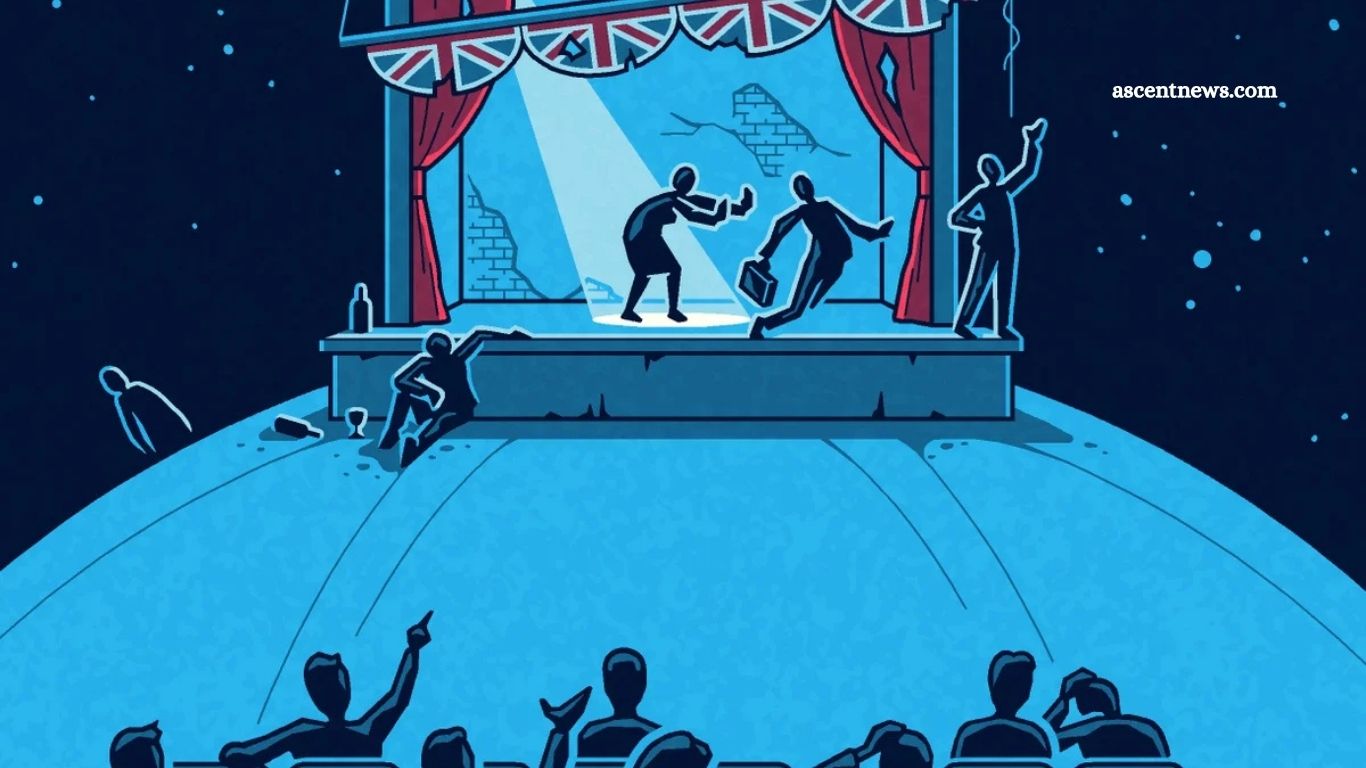
Permacrisis signals more than just ongoing instability—it reflects a system stuck in perpetual dysfunction. In the UK and beyond, politics appears to shift, yet the foundations remain unchanged. New parties emerge, outrage builds, and institutions are questioned, but the same power structures persist. As public trust erodes, mainstream parties continue to dominate, not through vision, but through legacy and entrenchment.
This isn’t a crisis of collapse; it’s a crisis of inertia. The real threat lies in a future where disillusionment grows, but transformation never comes—a political landscape where everything feels urgent, yet nothing truly moves forward.
Signs of Decay in the Political Centre
The 2019 general election marked the beginning of a slow political unraveling. Voter turnout was historically low, and Labour’s support among deprived communities dropped to record levels. Meanwhile, independent MPs and Reform UK candidates started to gain traction, highlighting a clear shift in public sentiment.
Since then, Labour’s shaky mandate has eroded even further. Approval ratings have plummeted faster than any governing party since John Major in the early 1990s. Internally, Labour continues to struggle with suspensions, internal rifts, and dissatisfaction from its own MPs and base.
This might not be a stable political climate—but it is a sustainable one, thanks to deeply entrenched systems that protect establishment parties. The UK’s first-past-the-post voting system, lack of proportional representation, and institutional power structures create high barriers to new entrants. The numbers may show a shift in public support, but they rarely translate into parliamentary seats.
Read More: US Strikes on Iran Backfire Dramatically, Yet a Path to Peace Remains
A Crisis Without Alternatives
Mainstream politics in the UK—and in much of the West—is caught in a loop of uninspired governance. Alternating between two dominant parties, both seemingly out of ideas on major issues like the cost of living or foreign policy, has bred widespread political fatigue.
The U.S. presents a similar story. Voters twice rejected the Democratic Party in favour of Donald Trump, only for Trump’s second-term approval ratings to crater. Neither centrists nor right-wing populists are delivering real solutions, yet their parties dominate the halls of power.
This political gridlock leads to a dangerous disconnect. Governments flounder while protest movements—on both the left and right—grow angrier. Independent voices like New York’s Zohran Mamdani or UK independent MPs represent real public sentiment, yet are often ignored or undermined by their larger political counterparts. Mamdani, for example, has yet to receive formal endorsement from senior Democrats.
Why? Because the establishment doesn’t have to change. As long as they can weather each cycle and count on the public’s disenchantment with the “other side,” they can retain power without reform.
The Burden of Expectation on New Movements
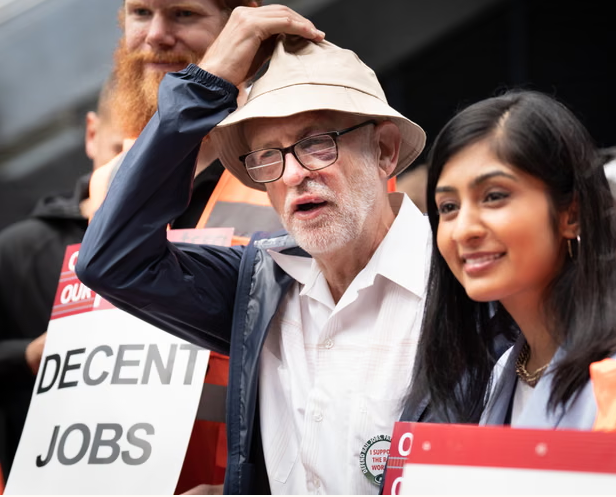
As frustration grows, new movements like Corbyn’s party or Mamdani’s progressive wing inherit unrealistic expectations. They’re seen not only as political alternatives but as emotional vessels for public outrage. These movements are expected to challenge the government, embody moral clarity, and present concrete policy—all at once.
This burden often leads to burnout or strategic confusion. Should they act as megaphones for public anger? Should they pivot toward electoral pragmatism? Doing both is nearly impossible without fracturing their base or losing clarity of purpose.
The Parallel Crisis in the Media
The same fragmentation-monopoly dynamic is unfolding in media. Alternative outlets like Zeteo and Drop Site News have surged, offering hard-hitting coverage—especially around Gaza—that mainstream platforms often avoid or dilute. Drop Site News, launched just a year ago, has already amassed nearly 400,000 subscribers, much of it due to raw, direct reporting from Gaza.
Yet mainstream outlets still wield enormous influence. When The New York Times reports on famine in Gaza, the response is seismic—not because their reporting is uniquely incisive, but because their platform shapes international discourse, particularly in powerful countries like the U.S.
So while independent media is growing, the legacy press still dictates much of what is politically possible. Just like in politics, the challenge isn’t simply displacing the mainstream—it’s proving that the mainstream’s authority is no longer deserved.
Labour’s Strategic Drift
Labour’s approach underlines this dysfunction. Rather than setting a bold new vision, the party has become reactive, trying to chase right-leaning Reform UK voters while simultaneously offering lukewarm gestures toward progressive causes like Gaza. Its platform now feels like a patchwork of political calculations rather than a coherent plan.
For instance, threatening to recognise Palestine only if Israel agrees to a ceasefire is not a stance—it’s a hedged bet that pleases no one. Meanwhile, the party attempts to revive austerity-era policies while fighting the very crises they helped create.
This lack of direction is costing Labour credibility and momentum. It’s operating on political inertia, legacy support, and institutional entrenchment—not belief, not ideas, and certainly not hope.
What Real Change Requires
There are only two ways for new movements to effect real change: winning power outright, or applying enough external pressure to reshape political agendas. The latter is more immediately attainable, but still extremely difficult.
The scope of failure by mainstream parties is so vast—from housing and healthcare to climate and foreign policy—that pressure from the outside often feels like a whisper in a hurricane. No single movement or party can fill all the gaps.
A Volatile, Stagnant Future?
What we’re witnessing is not just a fragmented left or rising populist right. It’s the entrenchment of a political centre that refuses to adapt, even as the country becomes more divided, angry, and desperate for alternatives.
The result may not be a revolution or collapse, but something worse: a stagnant, miserable status quo. In this reality, figures like Nigel Farage become permanent fixtures, extreme views on immigration gain ground, and no party has the clarity or courage to govern effectively. Meanwhile, new parties drown in expectation and marginalisation.
The real danger of this permacrisis isn’t the spectacle—it’s the paralysis. Not that the centre cannot hold, but that it can—and in doing so, locks us into a future of escalating rage and diminishing hope.
Frequently Asked Questions
What is a permacrisis?
A permacrisis refers to a prolonged period of instability, uncertainty, and dysfunction across political, economic, and social systems. It’s not a single crisis but a state where multiple crises overlap and persist without resolution.
Why is the current permacrisis considered dangerous?
The danger lies not just in the political or economic drama, but in the lack of meaningful change. Despite public dissatisfaction, mainstream power structures remain intact, preventing reform and fostering long-term stagnation.
How does this permacrisis impact UK politics?
In the UK, the permacrisis fuels voter apathy, political fragmentation, and distrust in mainstream parties. New political movements rise, but systemic barriers—like the first-past-the-post system—limit their ability to effect real change.
Can new political parties like Jeremy Corbyn’s make a real difference?
New parties can gain momentum and shift narratives, but without structural changes (e.g., proportional representation), they struggle to translate mass support into political power. They also face the burden of high public expectations.
Why are mainstream parties still winning if public support is dropping?
Legacy parties benefit from institutional entrenchment—historical loyalty, electoral rules, and media dominance—which allows them to hold power even when public approval declines.
What role does the media play in this ongoing permacrisis?
Mainstream media often fails to capture public anger or emerging narratives, leading to the rise of independent outlets. However, legacy media still holds massive influence over public opinion and political outcomes.
Is the political centre collapsing or becoming more entrenched?
Contrary to the idea that the centre is collapsing, it’s actually holding firm, despite being ideologically exhausted. This creates a miserable status quo where real change becomes nearly impossible.
Conclusion
The true threat of this permacrisis isn’t dramatic political upheaval—it’s the quiet, relentless erosion of public faith in change itself. As new parties emerge and alternative voices grow louder, the political establishment remains deeply rooted, buoyed by outdated systems and structural inertia. Voters are trapped in a loop where disillusionment grows, but power doesn’t shift.